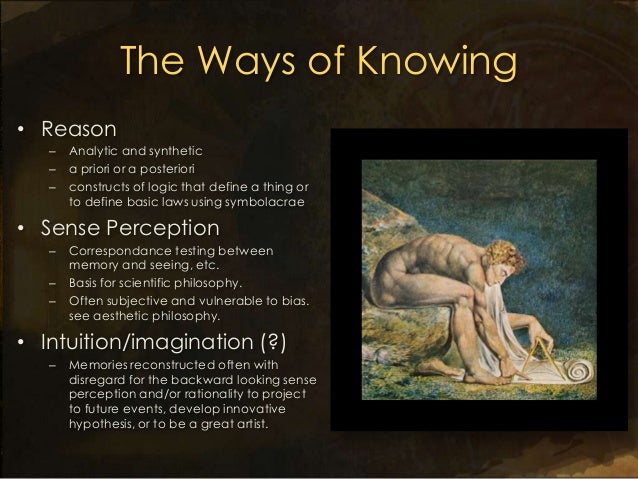
2. Rational v. Empirical, and Plato's "Justified True Belief" model of knowledge. This will be our working definition, and will be clarified and expanded throughout the course.
3. Formal Logic is comprised of prepositions that necessitate a particular conclusion. This is developed with a syntax that follows certain prepositional rules called the "Laws of Logic".
4. When those Logical rules are not followed, or the prepositions in a logical syllogism are incorrectly distributed, a fallacy is created.
5. There is a difference between informal and formal fallacies. Informal fallacies have more to do with topical argument and language than with structure and math.

This week's Assignment:
TOK Chs. 7-8, p. 94-132
Team 1: 94-100
Team 2: 101-106
Team 3: 107-113
Team 4: 114-120
Team 5: 121-127
Team 6: 128-132
Philosopher Portrait: Rene Descarte
Blog 2: Identifying Formal and Informal Fallacies


No comments:
Post a Comment