Thursday, April 25, 2013

Week 14: Review and Assignments


This week we finished looking at our 3 ideas about Natural Science:
  1. Scientific knowing is an evolving system that limits uncertainty through observation, experimentation, and inductive/deductive reasoning.
  2. Science as a language, ethos, and community reveals innate features of human identity and processing.
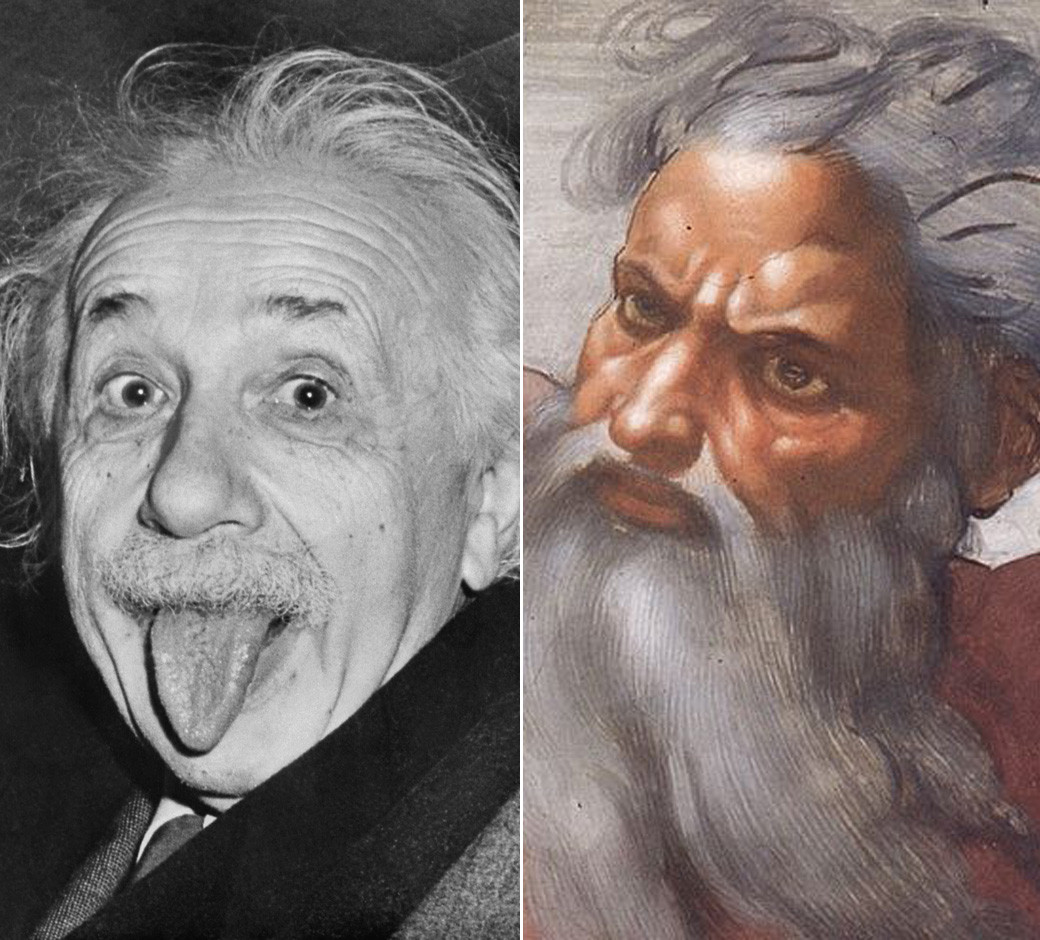
  3. Scientific objectivity and cultural diversity, particularly religious knowing, are often at odds for various reasons. Why?

Activities in Class:
1. We focused predominantly on idea 2 regarding Science as a collection of communal thought rooted in trust of social contract, ethics, and the shared goals and purpose of science.

2. We grappled with 4 scenarios in which students described solutions and approaches from a scientific perspective.  While our natural tendency is to think that Science offers no solutions in the realm of Ethics (having to code switch to a new area of knowledge to develop solutions), I posit that the fundamental nature of Science is not an arbitrary collection of data and observation, but a meaningful pursuit of knowledge that seeks the betterment of humankind through practical methodology.

3. We continued our analysis of Pseudo-
Science, discussing the devastating implications of politically strong counter-scientific programs, such as Matthias Rath and HIV "vitamin therapy" in Africa (around 171,000 new HIV infections and 343,000 deaths could have been prevented between 1999 and 2007).

4. Lastly, We briefly discussed your next Socratic Seminar on the topic "Science and Religion".  Your team must work through the model of argument-building, reflecting on your own understanding of TOK topics, and design a PoK question related to this topic to research and discuss. Be ready to use actual sources to defend claims in your seminar.  Prepare a real conversation from your thesis and make sure everyone in your team is able to contribute a new thought to the argument/observation.

Our Socratic Seminar will be Wednesday, May 8th, 2013.

Have a good weekend!  We will meet again Monday, April 29th to finish Natural Science (idea 3, and controversial topics like evolution) and research for the Socratic Seminar.


Wednesday, April 17, 2013

Week 13: Natural Sciences Weekly Review and Assignments

This week we introduced the Natural Science Area of Knowing.  Our conversation centered around 3 central ideas for the week:

  1. Scientific knowing is an evolving system that limits uncertainty through observation, experimentation, and inductive/deductive reasoning.
  2. Science as a language, ethos, and community reveals innate features of human identity and processing.
  3. Scientific objectivity and cultural diversity, particularly religious knowing, are often at odds for various reasons. Why?
We have explored the first 2 central ideas, and will continue with 2 and start 3 next week.

Here is a brief recap of our activities:

Monday 4/15/13
1. We watched the symphony of science music video and discussed some of the creative use of language in expressing the excitement and aesthetic of Scientific knowing over and against its often emotionless caricature.


 2. We questioned why it is that modern scientific knowing is lacking despite our incessant dependence on it. (We watched some juggalo questioning strategies to reinforce the point).
3. We considered the constantly changing disciplines and sub-disciplines of Science, and considered its similarity to the TOK Knower Profile.
4. We looked at how new paradigms clarify old ones, not destroy them. This establishes an important continuity in Scientific Knowing. 
5. We analyzed the ways in which the Scientific Method is produced and how it operates.


Wednesday 4/17/13

6. We questioned our own assumptions about the nature of observation in experimentation by recreating the double slit experiment.
7. We considered the language and syntax behind "Hypothesizing" over and against "prediction" and "guessing" by using an excerpt from Hawking's A Brief History of Time. 
8. We discussed the last experiment we did in our respective Biology and Chemistry classes , analyzing the methodologies and goals of our pursuit of knowledge academically.  We shared our personal experiences with poorly modeled experiments which often limit our understanding of science to "discovering definitions".

9. We looked at a list of "happy accidents" in Science with the expectation of a Monday discussion from your findings.
10. Lastly, we got out of our seats for some nice bull@)*% science using "Brain Gym" stretches to "massage our Carotid artery to increase oxidizing of the blood" while treating autism/ADHD with knee stretches and ear pulls.  We then looked at a quick quiz of "Yes or B.S" popular scientific statements (analyzing for both phrasing, content, and fallacy).

Your assignment for the week:

TOK Readings:
1.       153-157
2.       158-164
3.       165-170
4.       171-176
5.       177-182
6.       183-189

AIO: Evolution
7.       PP: Charles Darwin or Copernicus
8.       Special audio notes on:
9.       Guided, in-class note assignments (need these for Monday’s reading discussion)
a.       Definition of Science
b.      List 10 sub-disciplines of science
c.       Research a moment of “science serendipity”
d.      Find an example of “bad science”


Intelligence Squared Debate Motion: "Science Refutes God"

TED Talk, Ben Goldacre: "Bad Science"

Wednesday, April 3, 2013

6. Mathematics

The video lecture is incomplete this week due to exceeded space on my iPad (Sorry!).  Refer to the overview below:

This week we began an introduction into Mathematics as an Area of Knowing.

5 simple objectives:

1. Math as "future knowing"?
2. Math as History of Thought.
3. Math as a challenge of certainty.
4. Math as a Process
5. Math as Cultural Purpose


Summary of Lecture.  Students completed the following:

1. A magic trick connected to the perceived certainty of mathematical theorems.  All our numbers, no matter the choice, converged into a single result.  We compared this type of "future knowing" with the study of probability, using Nate Silver as a contemporary example.

2. We compared the philosophy of mathematics from Newton, Leibnitz, and Kant, asking the question "how might math give us knowledge of the "thing in itself" beyond normal empirical observation?" Kant believed that Math was, in fact, a logical and synthetic (both rational, and really in the world) type of knowledge.

3. We challenged the assertions with a brief discussion of special relativity.  Einstein change the "certainty" of mathematics by proving the existence of time and space as contingent on perspective, gravity and relative space between objects.

4. We looked at how various theorems (a set of axioms creating a formula about the world) can be proven by coherence, exhaustion (computer programs, probability, etc.). While no theorem can be philosophically certain, we described how Math attains a higher level of consistency than other areas of knowing.

5.  Lastly, we very briefly talked about the purpose of math.  We looked at mathematical proofs, learning, and utility across three cultures.  How might this be related to the objectivity of math considering the different needs of society?

Next week, we will discuss your readings and argue it out topic (climate change), as well as have a little fun and competition using mathematical probability and the Monty Hall problem.  We will also continue our question of math's discovery vs. creation by contemplating its use as a principle of Art and Music.

I found this excellent 1 minute recap of special relativity for those who need clarification:


04/01/13 11. Mathematics as Predictions of Knowing and History