
Friday, February 14, 2014

Blog 4: Moral Agents

What might be some other categories of Ethical reasoning? Consider two ethical characters throughout history or fictional culture, one that operates under a category we discussed, and one that operates under a new category that you either invent or research.
Identify and explain both.
Thursday, February 13, 2014
AMA on Reddit Today: Holocaust Survivor
 Very relavant to our discussion this week in Ethics. Check it out:
Friday, February 7, 2014
Wednesday, February 5, 2014
Blog 3: How Generalizations/Bias Underlie Argumentation
 Take a Harvard Implicit Test!
Many of the arguments and disagreements when encounter regarding the nature of reality are a result of unstated assumptions and generalization about the world and people. Being sensitive to these generalizations in argumentation takes time and practice.
Choose one or several Project Implicit tests. The designations for the tests are perhaps overstated, but you may surprise yourself. Complete at least one test and describe your results, including any surprises about yourself and the results.
Sunday, February 2, 2014
Blog 2: Logical Fallacies (Formal or Informal)
Here are the directions for Blog 2:
- Create a logical proposition with a formal or informal fallacy. Make it as silly as you want (refer to internet resources for inspiration)
- Respond to another student’s proposition with the correct identification. Offer a correction.
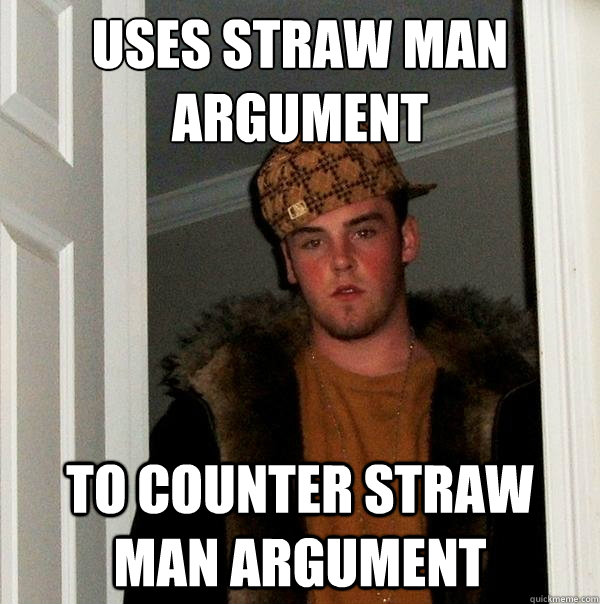
- Add a meme with the logical fallacy identified in your response for Extra Credit!
Week 2-3: Logic and Epistomology
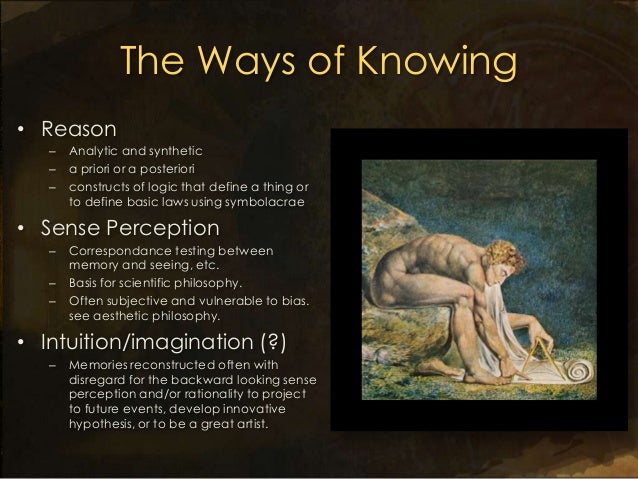
This week we looked at formal logical fallacies, and suggested the interaction between language and mathematics as the basis for epistemology. You are currently reading Chapters 7 and 8 on Reason and and the various Areas of Knowledge described in the TOK learner profile. Here is a basic summary of the points from this week:
 1. Week 1's discussion of the Ways of Knowing introduction, as well as the "Knower" as comprised of memories (and the limitations therein). I introduced the "Knowledge Prism"
2. Rational v. Empirical, and Plato's "Justified True Belief" model of knowledge. This will be our working definition, and will be clarified and expanded throughout the course.
3. Formal Logic is comprised of prepositions that necessitate a particular conclusion. This is developed with a syntax that follows certain prepositional rules called the "Laws of Logic".
4. When those Logical rules are not followed, or the prepositions in a logical syllogism are incorrectly distributed, a fallacy is created.
5. There is a difference between informal and formal fallacies. Informal fallacies have more to do with topical argument and language than with structure and math.

This week's Assignment:
TOK Chs. 7-8, p. 94-132
Team 1: 94-100
Team 2: 101-106
Team 3: 107-113
Team 4: 114-120
Team 5: 121-127
Team 6: 128-132
Philosopher Portrait: Rene Descarte
Blog 2: Identifying Formal and Informal Fallacies

2. Rational v. Empirical, and Plato's "Justified True Belief" model of knowledge. This will be our working definition, and will be clarified and expanded throughout the course.
3. Formal Logic is comprised of prepositions that necessitate a particular conclusion. This is developed with a syntax that follows certain prepositional rules called the "Laws of Logic".
4. When those Logical rules are not followed, or the prepositions in a logical syllogism are incorrectly distributed, a fallacy is created.
5. There is a difference between informal and formal fallacies. Informal fallacies have more to do with topical argument and language than with structure and math.

This week's Assignment:
TOK Chs. 7-8, p. 94-132
Team 1: 94-100
Team 2: 101-106
Team 3: 107-113
Team 4: 114-120
Team 5: 121-127
Team 6: 128-132
Philosopher Portrait: Rene Descarte
Blog 2: Identifying Formal and Informal Fallacies
Subscribe to:
Posts (Atom)