By Thomas Harding
 I have been thinking about these questions ever since I found out that my great-uncle, Hanns Alexander, a German Jew, was a Nazi Hunter. At the end of the Second World War he tracked down and caught one of the worst mass murderers of all time, Rudolf Höss, the Kommandant of Auschwitz.
 I have been thinking about these questions ever since I found out that my great-uncle, Hanns Alexander, a German Jew, was a Nazi Hunter. At the end of the Second World War he tracked down and caught one of the worst mass murderers of all time, Rudolf Höss, the Kommandant of Auschwitz.
These were also the questions that a team of American psychologists and psychiatrists were directed to answer during the Nuremberg Trials that opened on November 20, 1945, six months after the war’s end.
Charges of crimes against humanity were read out against 24 of the highest-ranking Nazis then in captivity, including Ernst Kaltenbrunner, chief of the Reich Security Main Office and the highest-ranking SS officer after Himmler’s death.
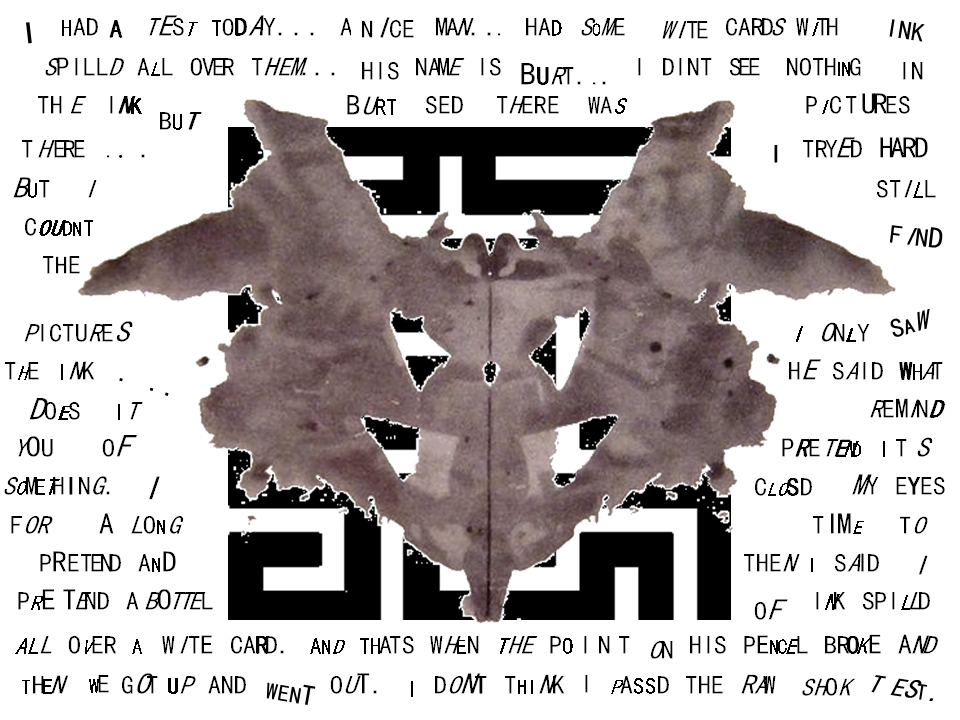
With so many senior Nazis held in one place at the same time, the Americans instructed a panel of psychologists to conduct extensive interviews and tests with the defendants. Such horrific crimes were committed surely by damaged men, men different in some fundamental way from the rest of humanity.
Among the defendants examined was Rudolf Höss, the Kommandant of Auschwitz. Unlike the others held in Nuremberg, Höss had been intimately involved in the design and day-to-day operations of the extermination camps.
First he was visited by Gustave Gilbert, a New Yorker born to Jewish-Austrian immigrants. Gilbert later wrote about his meeting with the Kommandant in his 1947 book Nuremberg Diary.
Gilbert asked for a brief career summary, and was surprised when Höss admitted in an unemotional tone that he had been responsible for the deaths of more than two and a half million Jews.
The American asked how it was possible to kill so many people. “Technically,” answered Höss, “that wasn’t so hard—it would not have been hard to exterminate even greater numbers.” Gilbert then pressed him for an emotional response, but Höss continued in a similar tone: “At the time there were no consequences to consider. It didn’t occur to me that I would be held responsible. You see, in Germany it was understood that if something went wrong, then the man who gave the orders was responsible.” Gilbert started to ask, “But what about the human—” before Höss interrupted, “That just didn’t enter into it.” After a few more questions, Höss said, “I suppose you want to know in this way if my thought and habits are normal.” “Well, what do you think?” Gilbert asked. “I am entirely normal,” said Höss. “Even while I was doing the extermination work, I led a normal family life.”