Extract Knowledge Issues that the articles share in common related to the Natural Sciences, Philosophy, and Mathematics, and create a Problem of Knowledge to discuss in class. Write the KI's and the PoK in the comments below.
Wednesday, March 19, 2014

6. Mathematics Overview
The video lecture is incomplete this week due to exceeded space on my iPad (Sorry!). Refer to the overview below:
This week we began an introduction into Mathematics as an Area of Knowing.

5 simple objectives:
1. Math as "future knowing"?
2. Math as History of Thought.
3. Math as a challenge of certainty.
4. Math as a Process
5. Math as Cultural Purpose
Summary of Lecture. Students completed the following:
1. A magic trick connected to the perceived certainty of mathematical theorems. All our numbers, no matter the choice, converged into a single result. We compared this type of "future knowing" with the study of probability, using Nate Silver as a contemporary example.
 2. We compared the philosophy of mathematics from Newton, Leibnitz, and Kant, asking the question "how might math give us knowledge of the "thing in itself" beyond normal empirical observation?" Kant believed that Math was, in fact, a logical and synthetic (both rational, and really in the world) type of knowledge.
3. We challenged the assertions with a brief discussion of special relativity. Einstein change the "certainty" of mathematics by proving the existence of time and space as contingent on perspective, gravity and relative space between objects.
4. We looked at how various theorems (a set of axioms creating a formula about the world) can be proven by coherence, exhaustion (computer programs, probability, etc.). While no theorem can be philosophically certain, we described how Math attains a higher level of consistency than other areas of knowing.
5. Lastly, we very briefly talked about the purpose of math. We looked at mathematical proofs, learning, and utility across three cultures. How might this be related to the objectivity of math considering the different needs of society?
Next week, we will discuss your readings and argue it out topic (climate change), as well as have a little fun and competition using mathematical probability and the Monty Hall problem. We will also continue our question of math's discovery vs. creation by contemplating its use as a principle of Art and Music.
I found this excellent 1 minute recap of special relativity for those who need clarification:
This week we began an introduction into Mathematics as an Area of Knowing.

5 simple objectives:
1. Math as "future knowing"?
2. Math as History of Thought.
3. Math as a challenge of certainty.
4. Math as a Process
5. Math as Cultural Purpose
Summary of Lecture. Students completed the following:
1. A magic trick connected to the perceived certainty of mathematical theorems. All our numbers, no matter the choice, converged into a single result. We compared this type of "future knowing" with the study of probability, using Nate Silver as a contemporary example.
 2. We compared the philosophy of mathematics from Newton, Leibnitz, and Kant, asking the question "how might math give us knowledge of the "thing in itself" beyond normal empirical observation?" Kant believed that Math was, in fact, a logical and synthetic (both rational, and really in the world) type of knowledge.
3. We challenged the assertions with a brief discussion of special relativity. Einstein change the "certainty" of mathematics by proving the existence of time and space as contingent on perspective, gravity and relative space between objects.
4. We looked at how various theorems (a set of axioms creating a formula about the world) can be proven by coherence, exhaustion (computer programs, probability, etc.). While no theorem can be philosophically certain, we described how Math attains a higher level of consistency than other areas of knowing.
5. Lastly, we very briefly talked about the purpose of math. We looked at mathematical proofs, learning, and utility across three cultures. How might this be related to the objectivity of math considering the different needs of society?
Next week, we will discuss your readings and argue it out topic (climate change), as well as have a little fun and competition using mathematical probability and the Monty Hall problem. We will also continue our question of math's discovery vs. creation by contemplating its use as a principle of Art and Music.
I found this excellent 1 minute recap of special relativity for those who need clarification:
Friday, March 14, 2014
Blog 5: History and it's sources.
Complete two tasks before Tuesday:

1. Find an AMAZING fact from history, something that really surprises you, or somehig you can't quite wrap your mind around. Include a picture!
2. Find a PRIMARY source confirming the information you found from your popular/secondary source. In other words, fact-check your assertion.
My fun history fact:

Wednesday, March 5, 2014
29 Incredible Colorized Historical Photos. Number 8 Is Terrifying.

http://www.tickld.com/x/29-incredible-colorized-historical-photos
Saturday, March 1, 2014
5. History as an Area of Knowledge. Ch. 12, p. 211-236
This week our goal is to consider the progressive nature of historiography throughout time.
 We completed an activity on historical reliability and transmission of information, considering how personal perceptions and our interactions with various ways and areas of knowing affected the ways in which our historical information was relayed.
We also discussed some of the underlying principles of historical observation using Jorgenson's rationalist 7-step model on the limits and reliability of history based on time, space, motivation, and quantity.
On Wednesday we considered the development of history throughout time, starting with the Greco-Roman traditions, swerving into the non-western developments of China and Muslim cultures. We left off with what will be a contrast between Early Christian and Judeo-Palestinian conceptions of time, into the Enlightenment Whip school, Hegelianism, Annales school and lastly, Marxism next week.
On Thursday we completed a Socratic Seminar on ethical dillemas
We came up with the following Problems of Knowledge Questions
1. To what extent is it ethical to control and moderate another's nature, as well as his ability to make choices?
2. How is purpose and motive contributing factors in the ethics of ownership?
3. How is justice quantified as punishment in different legal systems?
Assignments:
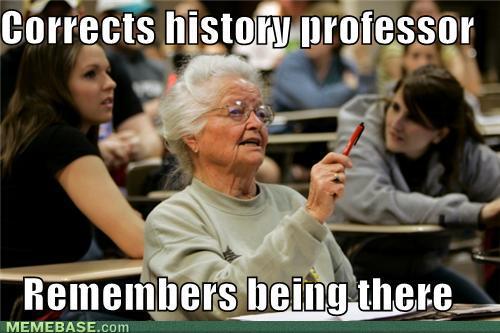 We completed an activity on historical reliability and transmission of information, considering how personal perceptions and our interactions with various ways and areas of knowing affected the ways in which our historical information was relayed.
We also discussed some of the underlying principles of historical observation using Jorgenson's rationalist 7-step model on the limits and reliability of history based on time, space, motivation, and quantity.
On Wednesday we considered the development of history throughout time, starting with the Greco-Roman traditions, swerving into the non-western developments of China and Muslim cultures. We left off with what will be a contrast between Early Christian and Judeo-Palestinian conceptions of time, into the Enlightenment Whip school, Hegelianism, Annales school and lastly, Marxism next week.
On Thursday we completed a Socratic Seminar on ethical dillemas
We came up with the following Problems of Knowledge Questions
1. To what extent is it ethical to control and moderate another's nature, as well as his ability to make choices?
2. How is purpose and motive contributing factors in the ethics of ownership?
3. How is justice quantified as punishment in different legal systems?
Assignments:
Team 1: 211-215
Team 2: 216-220
Team 3: 221-225
Team 4: 226-230
Team 5: 231-233
Team 6: 233-236
PP: Team 1-3: Georg Hegel
Team 4-6: Michel Foucault
AIO: Just War Theory


Subscribe to:
Posts (Atom)